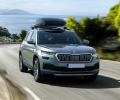
Suspension that has fully acclimatised to Indian roads and handles potholes and bumps with ease, plush interiors that feel premium beyond just surface level, and aggressive and imposing design cues give this SUV a presence and profile that has little competition, says Pavan Lall.

Even as domestic passenger car sales declined 29.4 per cent between April and August this year, exports grew 6.5 per cent, partially cushioning the blow from slowing sales.

Passenger vehicle majors like Hyundai, Tata Motors, M&M, Toyota Kirloskar and Honda on Wednesday reported growth in domestic sales in August riding on festive sentiments, although market leader Maruti Suzuki posted a decline amid a semiconductor shortage affecting the industry. The country's largest carmaker Maruti Suzuki India Ltd (MSIL) reported domestic sales at 110,080 units, as compared to 116,704 units in the same month last year, down 6 per cent. "Sales volume of the company in August 2021 was affected due to electronic components shortage.

New participants included Chinese players such as Great Wall Motors and Haima Automobile along with Olectra.

Market leader Maruti Suzuki is putting finishing touches to its plan of finding its feet in what is being hailed as a battle of epic proportions in India's fastest-growing passenger vehicle segment, reports Arindam Majumder.
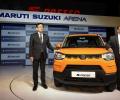
The country's largest carmaker Maruti Suzuki India will not "walk away" and fight to get back to 50 per cent market share in the domestic passenger vehicle segment, according to company Chairman R C Bhargava. The auto major, which is commemorating 40 years of operations, has seen its market share drop to 43.38 per cent in FY22 from a peak of 51.21 per cent in FY19. In order to get back its dominant leadership, the company plans to drive in models catering to both urban and smaller cities and rural areas.

The Duke of Edinburgh has been pictured back behind the wheel of a new Land Rover on Saturday afternoon on the Sandringham estate, the royal family's Norfolk retreat near to which the Thursday's accident took place, the Telegraph reported.

Earlier in May, Ford India announced that it had dropped its plans to make electric vehicles (EVs) in India, which it intended to export, under the production-linked incentive scheme (PLI). Ford was among 20 companies that had signed a Champion OEM Incentive Scheme under the PLI project with the government in February this year. The decision comes as a blow for the 4,000-odd employees at Ford India's Maraimalai Nagar plant near Chennai and in Sanand, Gujarat. In September last year, the company had announced that it would exit the India market, which it had entered in 1995 through an on-again, off-again joint venture with Mahindra & Mahindra (they split in 1998, signed a JV in 2019 and split again in December 2020), retailing petrol and diesel brands such as the EcoSport, Figo, Aspire, and Endeavour.

Asia's falling stocks have triggered an exodus of funds from the region.

However, notable absentees from the expo will be Honda, Toyota, Ford, BMW, Audi, Lexus, Volvo and Jaguar Land Rover along with two-wheeler majors Hero MotoCorp, Bajaj Auto and TVS Motor Co.

Auto Expo's Twitter handle (@AEMotorShow), with a follower base of 16,000, is abuzz with activity. The Facebook page of Auto Expo has about 158,000 followers.

Besides their country of origin, General Motors, Ford Motor and Harley-Davidson have another trait in common: all three have failed in India, the world's fifth largest automobile market. All three of them took a tough call to de-prioritise India as a market amid disruption from heightened regulations and sharper focus on capital allocation by the parent.

What worked for Hyundai in India when so many other auto manufacturers have had to eat humble pie? Pavan Lall finds out.

The number of participating automakers has fallen from 50 in 2018 to 30 this year. The count of exhibitors, including technology companies, has come down from 119 to 112. And showstopper luxury and supercar brands, including Toyota, Jeep, Lamborghini, Porsche, and Volvo will be missing. Similarly, the commercial vehicle makers also gave the show a miss -- a prolonged economic slowdown has dented their fortunes and near chances of any recovery.

Post Jayalalithaa's death, the Tamil Nadu government is in confused state.

Hyundai Motor India Limited (HMIL) has been giving facelifts to its current range of cars. So are the changes on the Hyundai i10 worth it? Dig deeper to get your answers.

At 47 protests a day, the state has become the most restive in the country and investors are becoming increasingly wary

Smart positioning, continued communication and a global design language have played a big role, say experts
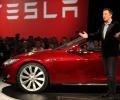
What will it take for Tesla to plug and play in India? Sector pundits say it's a mix of strategy, getting the price right, timing, the right talent, and above all, patience.

Summary of sports events and persons who made news on Tuesday
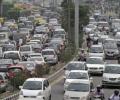
Vehicle sales have been hampered by weak consumer sentiment and still-weak availability of financing following tighter liquidity at non-banking lenders since the middle of 2018.

Big brands like Hyundai, Mahindra and Mahindra (M&M), Toyota and Renault have lost share.

The two-acre office complex under construction on the outskirts of Delhi will be home to about eight hundred company executives. Special care is being given to air purification and the building will be equipped with a three-stage air filter system.

Maruti will showcase its first concept electric vehicle, the e-SURVIVOR; M&M it's six new EVs, including two futuristic concepts

After snapping his political alliance with the ruling National Democratic Alliance at the Centre, N Chandrababu Naidu, chief minister of Andhra Pradesh, speaks to B Dasarath Reddy on what he now has in mind.

Tata now occupies the fourth slot with the incremental volumes from the Tiago

Maruti is now at a market share of 50.4%, up from 47.3% last year. In China, the world's biggest market, Volkswagen is the largest, with a share of 17%. In America, the second biggest, GM is leader with 18%. One exception is South Korea, where Hyundai has a market share in excess of 60%.

The edge that Maruti Suzuki enjoys over Hyundai and other rivals stem primarily from its gigantic scale, reports Ajay Modi.

'More than one brand in a showroom is too risky because customer loyalty in this market is low. Most people don't drive different cars made by the same manufacturer for a lifetime, they experiment.'
